Blog
The Pain Playbook
The Pain Playbook is where recovery gets explained — not oversimplified.
Thoughtful, clinically grounded insights on pain, movement, hormones, and longevity, designed to help you understand your body, prevent setbacks, and rebuild capacity with confidence.
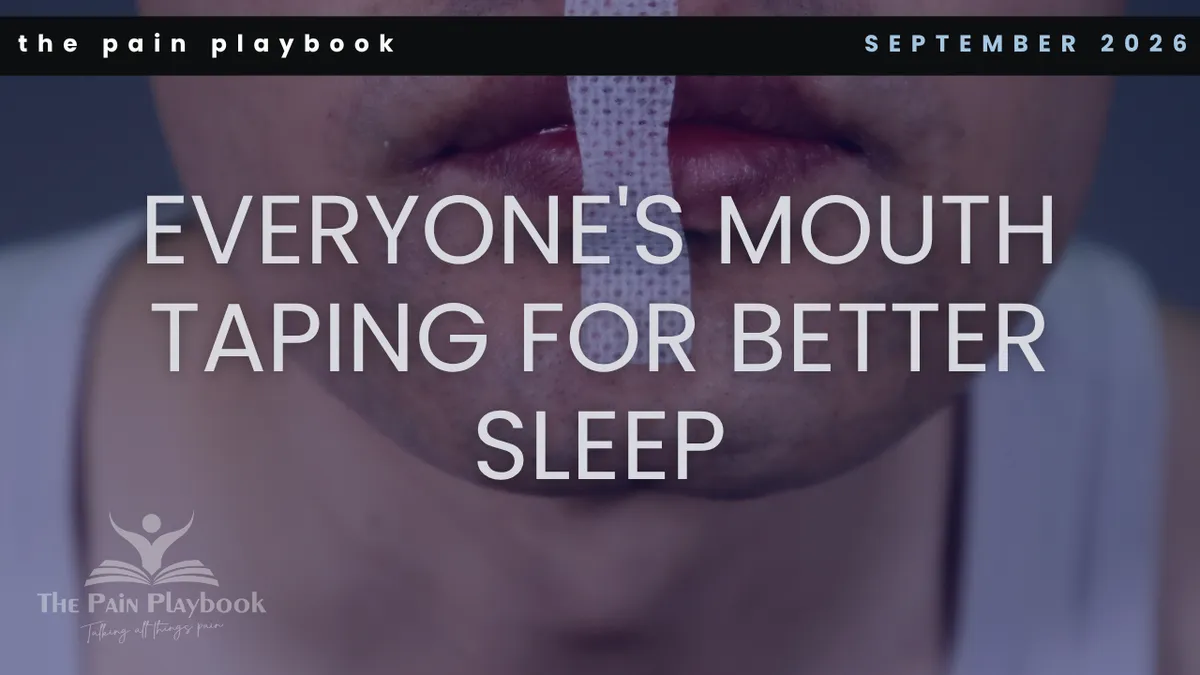
Everyone's Mouth Taping for Better Sleep
Everyone's Mouth Taping for Better Sleep. Nobody's Talking About Why That's Risky.
THE PAIN PLAYBOOK • SEPTEMBER 2026
You've probably seen it by now. A strip of tape across someone's lips before bed, promising better sleep, less snoring, even a sharper jawline. It's all over TikTok (the hashtag has more than 24 million views) and a few celebrities have quietly endorsed it too.
The idea sounds simple enough: tape your mouth shut, force yourself to breathe through your nose, sleep better. And nasal breathing really is better than mouth breathing. That part's true.
Here's Where It Gets Risky
If you breathe through your mouth at night, there's usually a reason. Allergies. A deviated septum. Or the one nobody wants to think about, undiagnosed sleep apnea.
Mouth breathing is often your body's backup system. When your airway is struggling, your mouth opens automatically so you can still get air. Tape that shut, and you've just disabled the backup without fixing whatever was blocking your nose in the first place.
A team of sleep researchers actually studied this and put it plainly: taping your mouth shut can be dangerous, especially for people who don't know they have sleep apnea. If your airway collapses during the night and your mouth is taped closed, your body loses its way to compensate. That's a real cardiovascular stressor. Not a minor inconvenience.
So Is Nasal Breathing Actually Bad to Want?
No. Nasal breathing genuinely is better. It filters, warms, and humidifies the air, and it helps your body use oxygen more efficiently. The goal behind mouth taping isn't wrong. The method is just skipping a step.
If you're a habitual mouth breather at night, the useful move isn't tape. It's figuring out why. That might mean a conversation about allergies, a look at your nasal anatomy, or if you're waking up tired, snoring loudly, or your partner's mentioned you stop breathing at night, an actual sleep evaluation.
This Hits Different People Differently
If you're 40+: airway muscle tone naturally loosens with age, which raises sleep apnea risk (exactly the group where an undiagnosed issue matters most).
If you're on a GLP-1: significant weight change can actually shift airway anatomy in both directions, so it's worth a fresh look at how you're sleeping mid-transition, not just before or after.
If you're post-surgical: general anesthesia is already a stress test on your airway. Extra caution here is worth it.
If your hormones are shifting: perimenopause and menopause are linked to a real increase in sleep apnea risk, since declining estrogen and progesterone affect airway muscle tone. If your snoring or sleep quality has changed recently, that's worth mentioning to your doctor, not just something to tape over.
Your body already has a way of telling you when your airway needs help. The fix isn't muting the signal.
💬 Have you tried mouth taping? Did anyone ever mention the sleep apnea risk to you?
→ If jaw tension is part of your daytime pattern, that's exactly what we work on. Book a Recovery Session at bodytechnyc.com
→ Body Reset Quiz™ to see where your body's actually asking for attention.

Ready to Start?
Book Your Initial Recovery Session
60-75 minutes | Includes R3 Recovery consult
Concierge Recovery
SecondWind Program
The Pain Playbook
Contact
Privacy
Add Subtext text. Click "Edit Text" to update the font, size and more.
To change and reuse text themes, go to Site Styles.


(646) 656-1141
bodytechnyc@gmail.com